Why Virginia weather is tough on exterior walls
Virginia doesn't have one climate. Homeowners in the mountains of the southwest deal with snow and ice, while folks near the coast get salt air and heavy summer storms. Most of the state sits somewhere in between, with hot, humid summers and winters that swing above and below freezing several times a month.
That kind of swing is what wears siding down. Materials expand when they warm and contract when they cool, and they do it every day. Over years, that movement loosens fasteners, opens seams, and gives water a way in behind the wall.
Our crews see the same pattern across Virginia. The siding itself is often fine. The trouble is what happens at the joints, corners, and edges where the material meets the rest of the house.
Summer humidity and moisture behind the wall
Humidity is the quiet problem. A Virginia July can keep the air near saturation for days, and that moisture moves. It pushes into wall cavities, especially on the shaded north and east sides that never fully dry out after a storm.
Vinyl handles moisture well on the surface but still depends on proper installation and a clear water path behind it. Wood and fiber cement need more attention. Look for these signs after a wet summer:
- Soft spots or swelling near the bottom course of lap siding
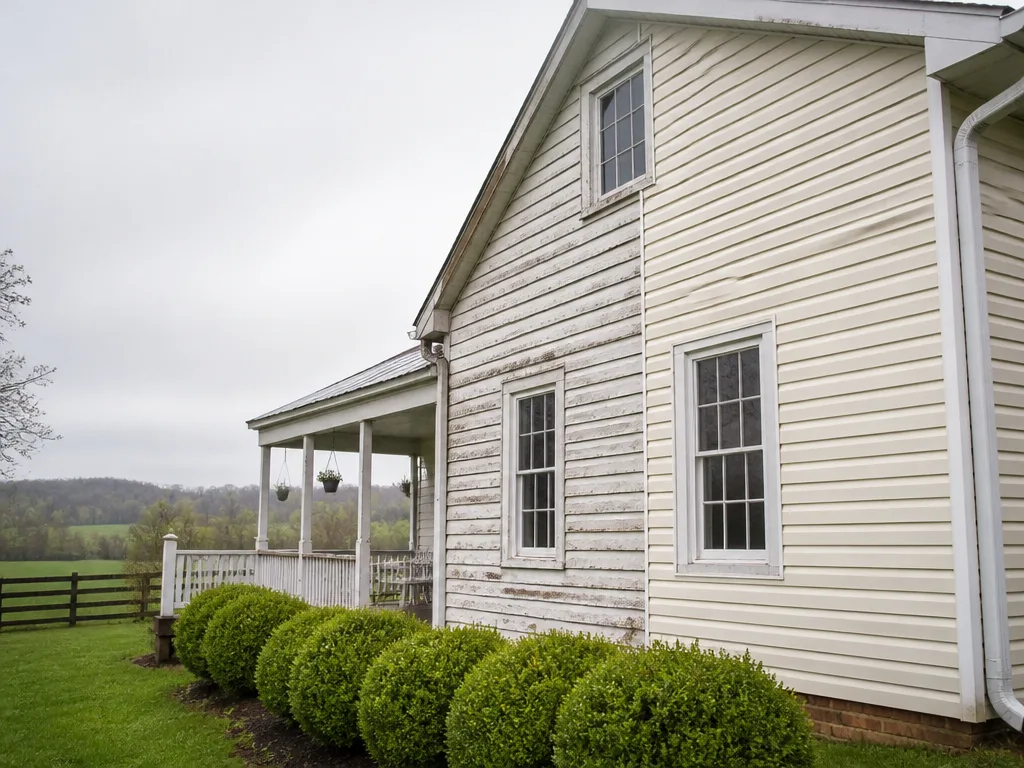
- Paint that blisters or peels in a band along the ground line
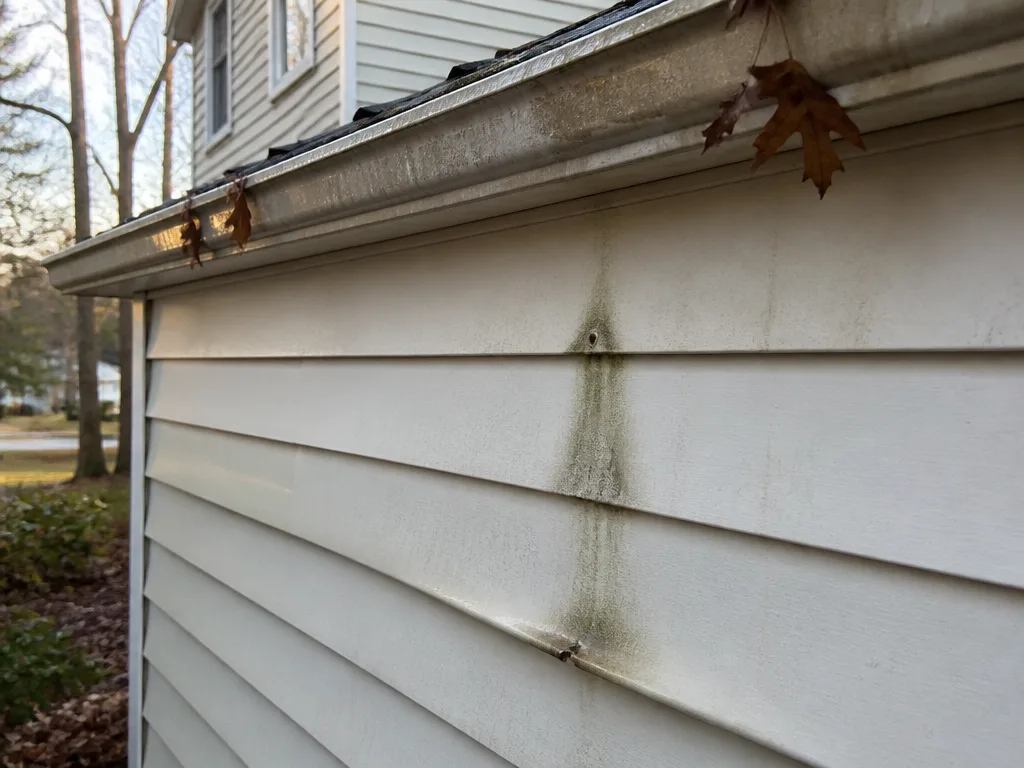
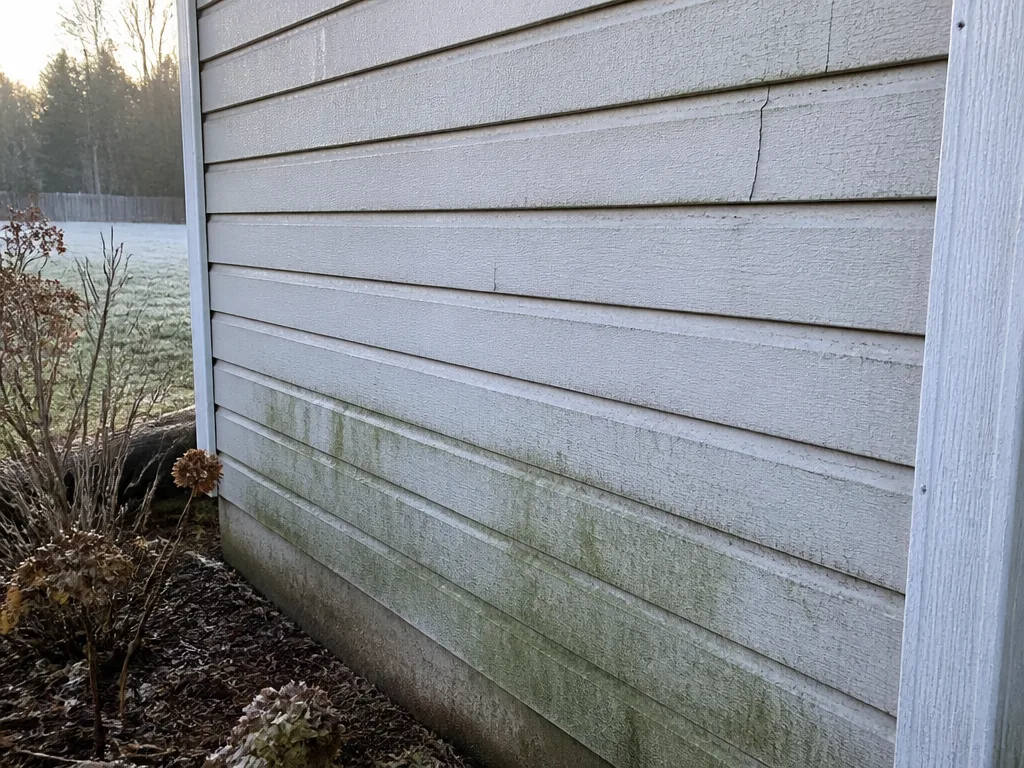
- Dark streaks or mildew that come back within weeks of cleaning
- Caulk that has pulled away from window trim or corner boards
If you see any of these, don't just scrub the surface. Find out where the water is getting in. A soft board often means the moisture problem started higher up, usually at a gutter overflow or a splash zone that stays wet.
Freeze-thaw cycles and winter movement
Freeze-thaw is the reason so many siding repairs happen in late February and March. Water soaks into small cracks or the top edge of a board during a warm afternoon, then freezes overnight. Ice expands, the crack gets wider, and by the next thaw the damage is bigger.
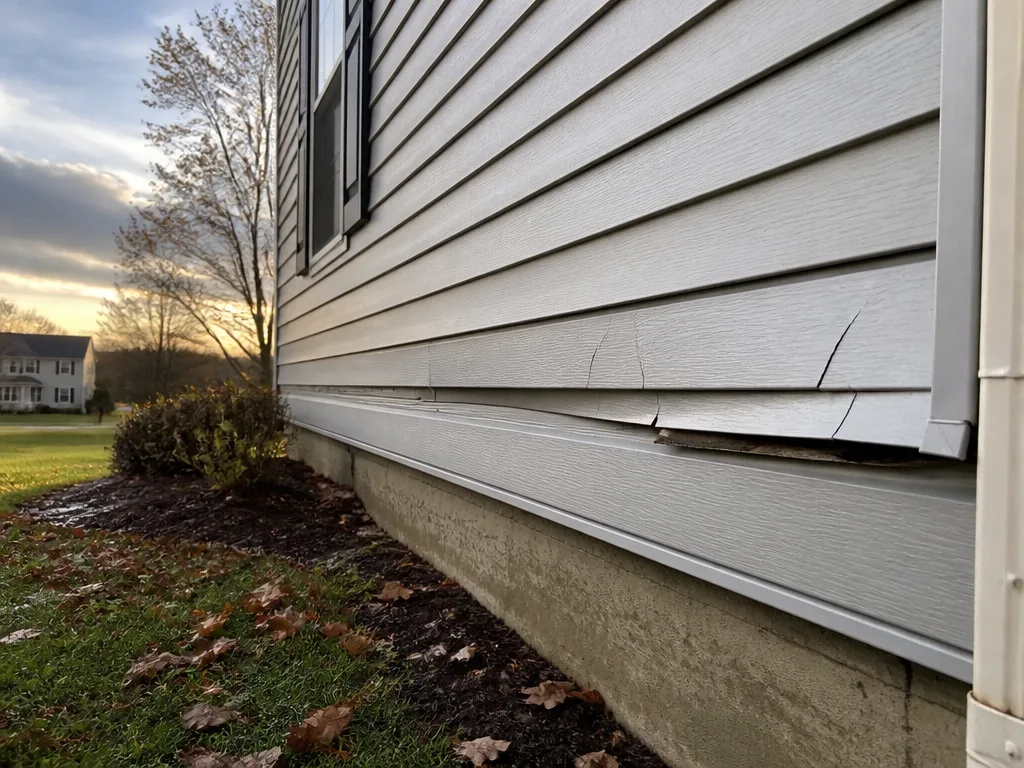
Vinyl becomes more brittle in deep cold, and a hard hit from a dropped limb or a snow shovel can crack a panel that would have been fine in August. Wood and fiber cement can split along grain or edges when they take on water and then freeze.
Check these spots after a cold snap:
- Hairline cracks near nail holes, especially on the south-facing walls that thaw first
- Panels that have popped off the wall or bow outward between fasteners
- Gaps where the siding meets the foundation or porch posts
Spring storms and seasonal wind
Spring is when Virginia gets its strongest wind and hail events, often with little warning. A single storm can lift the bottom edge of vinyl or crack the face of fiber cement. Wind does its real damage through loose or missing fasteners, so the nails are the first thing to look at.
Walk the perimeter after a big storm and look for panels that rattle when you press on them. Check for nails that have backed out, since they leave the panel free to flex and fail. If a section is cracked or lifted, get it looked at before the next rain finds the gap.
What to do before each season changes
Late spring
Wash the siding with a soft brush and a mild detergent solution, working from the bottom up. Rinse with a garden hose on a low setting. Pressure washers can force water under laps and into seams, so skip them on older walls.
Late summer
Walk the foundation line and look for splash marks or soil that has built up against the siding. Keep mulch and soil at least a few inches below the bottom course. Make sure gutters drain away from the wall, not onto it.
Late fall
Clear leaves from the base of the wall and look at caulk around windows, doors, and corners. Caulk that has cracked or shrunk should be replaced before the first hard freeze, not after.
Winter
Avoid leaning ladders against the siding in icy weather, and go easy with snow removal near the walls. Knocking ice off a panel with a shovel is one of the most common ways siding gets cracked in Virginia.
When to call Chesapeake Siding
Some of this you can handle yourself. Cleaning, clearing debris, and re-caulking small gaps are reasonable weekend jobs. But once you see soft wood, repeated cracks along the same line, or panels that have come loose from the wall, it's time to bring in help.
Chesapeake Siding works with homeowners across Virginia, from the mountain counties to the Tidewater. Our siding specialists know how the seasons hit different exposures, and they can tell you what is a cosmetic issue and what is a moisture problem that will keep growing. Call us at your convenience and describe what you are seeing. The phone is the best way to reach us, and we will talk through the next steps wherever you are in Virginia.