Most siding stains aren't emergencies. A little green on the north side after a wet spring is common across Virginia, and it often washes off with a gentle cleaning. But some stains are different. They spread, they change texture, or they show up where they shouldn't. Knowing the difference can save you from a bigger repair bill later.
At Chesapeake Siding, we work with homeowners all over the state, from older farmhouses in the Shenandoah foothills to newer subdivisions near the coast. The houses look different, but the warning signs tend to be the same. This post walks through what to watch for and what you can do yourself while you wait for a siding specialist to come out.
Signs the staining is urgent
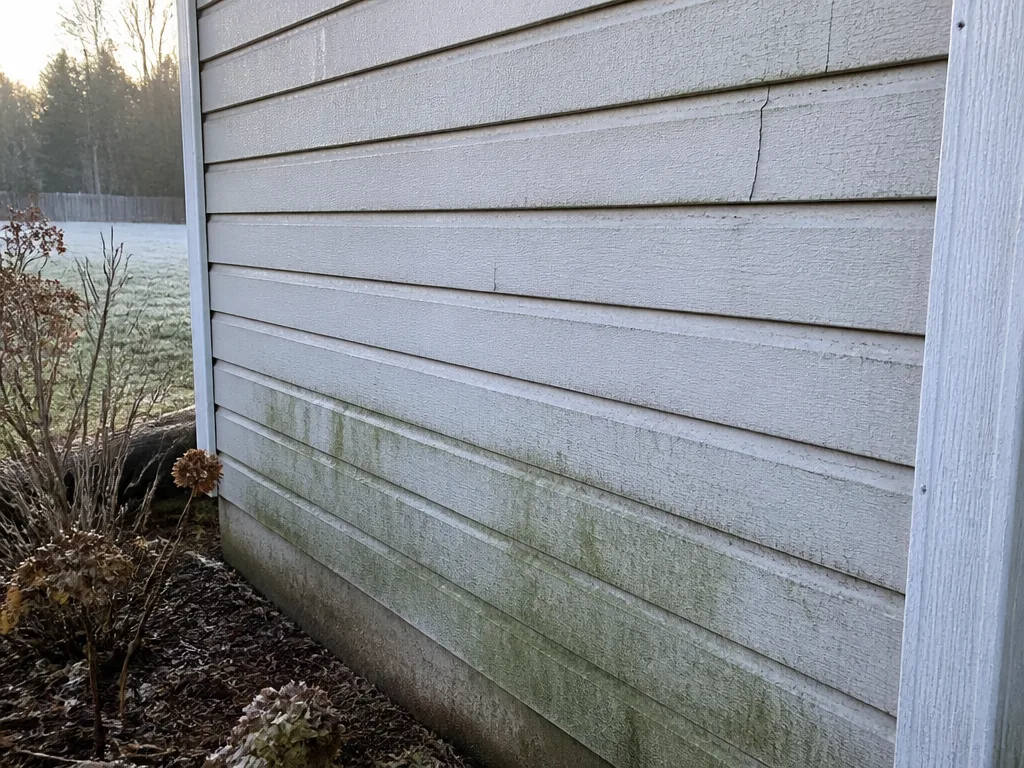
Color alone doesn't tell you much. A uniform gray film on a shaded wall is usually surface grime. A stain that looks wet, feels soft when you press it, or keeps darkening over a few days is a different story. Those are the ones to take seriously.
Here are the signs that point to a faster response:
- Soft or spongy spots when you press a finger against the board
- Stains that grow noticeably over one or two weeks, especially after rain
- Black, dark brown, or greenish patches that appear in the same spot every time it storms
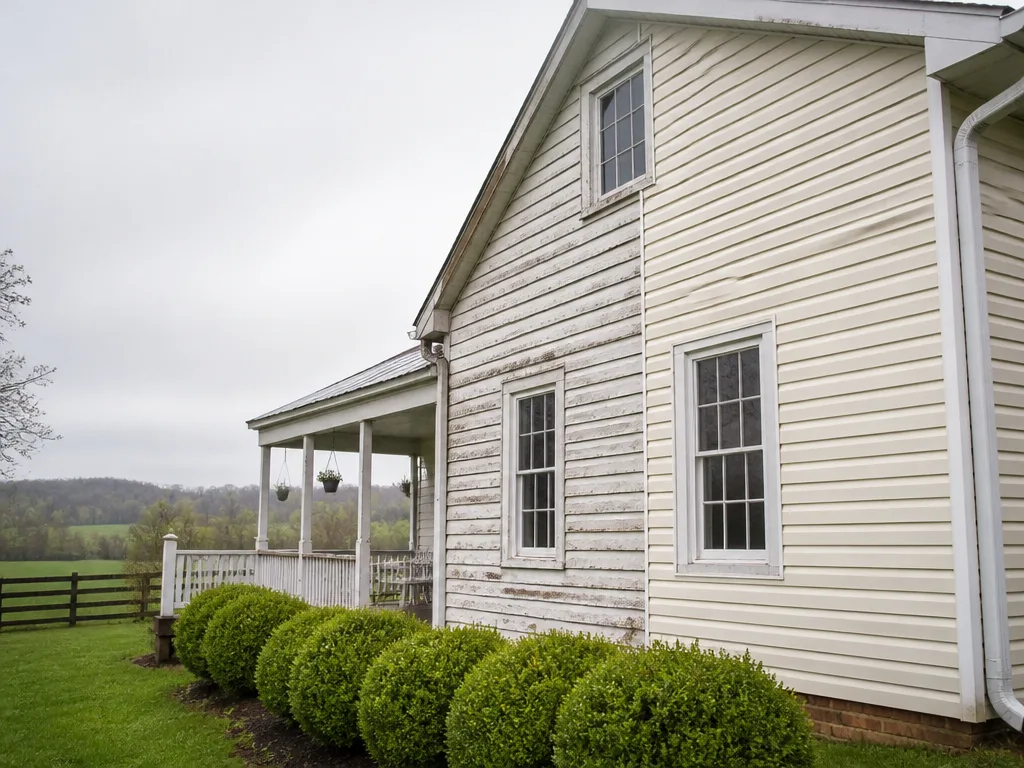
- Paint or finish that bubbles, flakes, or peels away in a rough patch
- A musty smell near an exterior wall, or staining that shows up indoors on drywall or trim
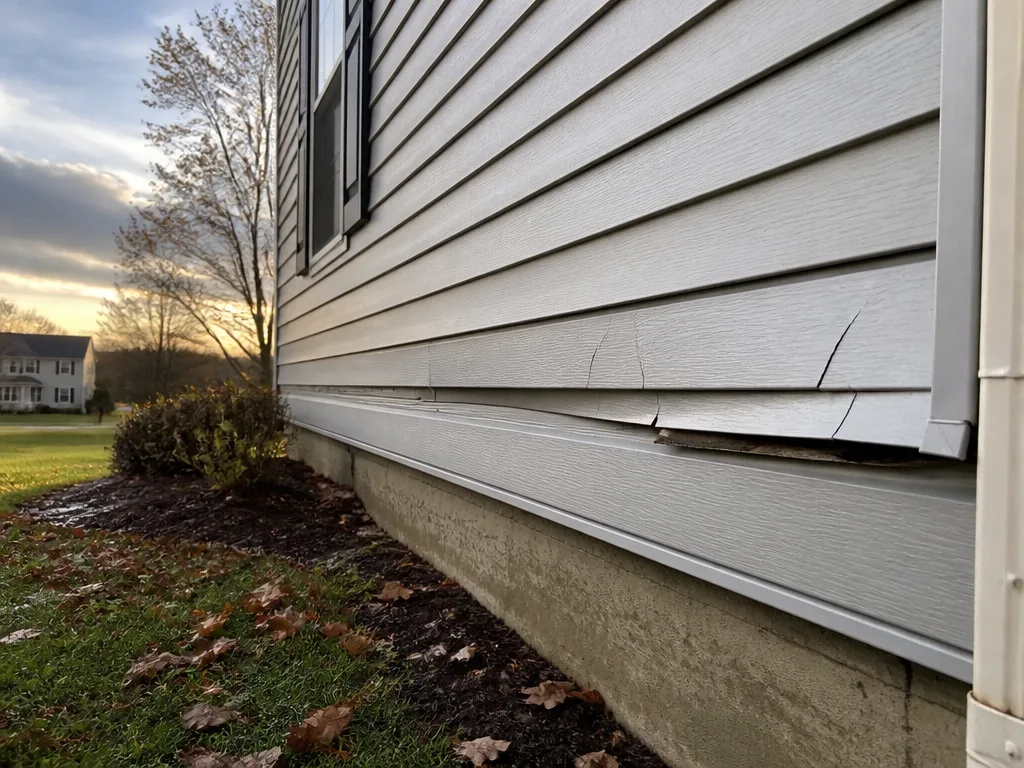
- Gaps or warped seams where water could be getting behind the panels
If you see more than one of these, don't wait for a dry week to decide it can sit. Water that gets behind siding can reach sheathing and framing, and that's where costs climb.
Why location matters in Virginia
Virginia gives siding a lot to deal with. Humid summers in the Tidewater region encourage mold and mildew on shaded walls. Mountain counties see freeze and thaw cycles that crack caulk and push moisture into joints. Areas with big oak and maple trees collect pollen, sap, and damp leaf litter that stain siding from the ground up. A stain that looks harmless in a dry climate can behave very differently after a few humid weeks in July.
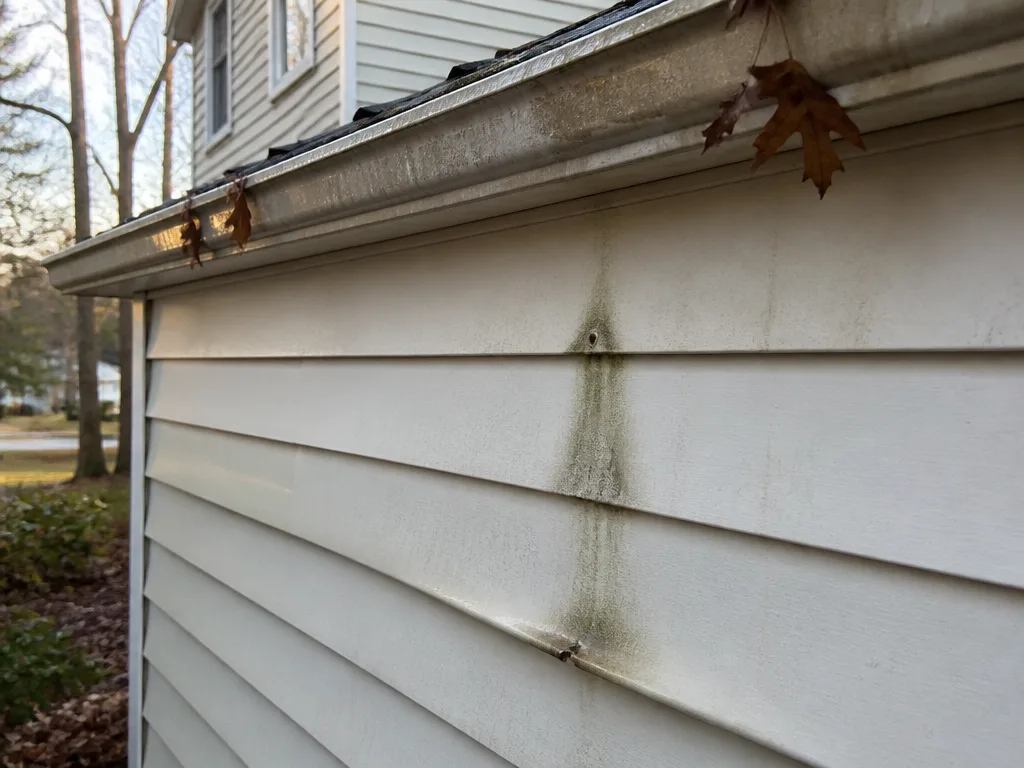
Pay attention to which side of the house the stain is on. North and shaded east walls stay damp longer. Stains near downspouts or under a clogged gutter usually mean water is running down the wall instead of away from it. Fixing the source matters as much as cleaning the surface.
What to do while you wait for help
Once you've decided the stain needs attention, the next few days are about protecting the house and keeping the problem from getting worse. You don't need special equipment for most of this, but you do need to be careful.
Start by taking photos. Shoot the stain from a few distances, with a coin or ruler in frame for scale. Note the date and what the weather was like. Photos help the crew understand how fast things are changing, and they give you a record if you need to compare later.
Next, check the gutters and downspouts closest to the stain. If water is pouring over the edge or the downspout is loose, clear the debris and make sure the water is carried several feet away from the foundation. This one step often slows the damage more than anything else you can do.
Simple steps that help
Some things are worth doing right away:
- Trim back shrubs and branches so they aren't touching the siding or holding moisture against it
- Rinse loose dirt off the surface with a garden hose on a low setting, keeping the water spray pointed down rather than up under the panels
- Mark the edges of any soft spot with painter's tape so you can see whether it grows
- Keep an eye on interior walls near the stain and note any new marks, bubbling paint, or odors
What you should avoid is just as important. Don't scrub hard with a wire brush, don't pressure wash at full power, and don't try to patch soft wood with filler and call it finished. Each of those can drive water deeper or strip the protective finish, which makes the next repair bigger.
How to reach a siding specialist without delay
Calling is the fastest route. Our team takes calls from homeowners anywhere in Virginia, and the more detail you can give on the first call, the better the conversation goes. Describe what you see, how long it has been there, whether it has changed, and whether you've noticed any interior signs. Mention the side of the house and the type of siding if you know it, whether that's vinyl, fiber cement, wood, or aluminum.
Scheduling depends on the season and how busy the crews are, so ask what the next available window looks like. Same-week scheduling is common for many repairs, but urgent cases may move up depending on what the team learns on the phone. Be honest about how worried you are. A good siding specialist will tell you straight whether the stain can wait or needs attention now.
What to have ready when you call
A few details make the conversation shorter:
- Your street address or general area, so the team can plan the route
- The photos you took, plus a rough measurement of the stained area
- Notes on recent weather, especially heavy rain or freeze events
- Any work done to the siding, gutters, or roof in the past few years
If you're not sure whether the staining is urgent, call anyway and describe it. Describing what you see is free, and a short conversation can save you a week of worry.
Keeping small stains from becoming big problems
Once the immediate concern is handled, a little routine maintenance goes a long way. Walk the exterior twice a year, once in spring and once in fall. Look at caulk around windows and doors, check the seams where panels meet, and watch the ground near the foundation for pooling. Sweep off the leaves and seed heads that collect against the lower courses.
Cleaning once a year, with a soft brush and a mild cleaner made for siding, keeps mildew from setting in. Rinse thoroughly from the bottom up so you don't leave streaks. If you find the same spot staining again and again, that's usually a sign of a moisture problem behind the wall, not just dirt on the surface. Those spots deserve a closer look.
Virginia weather is hard on every exterior surface, but most siding problems start small. A stain caught early is usually a simpler job than one that has been soaking for a season. If something looks off, pick up the phone and describe it to our team. We'll tell you what we see and what makes sense from there, wherever you are in the state.